

Ticker: COLB
Stock price: 19
ADV: 57M
Market Cap: 4B
Position: Long
Executive Summary:
Ragnarok Research is long Columbia Banking System, for mainly three reasons:
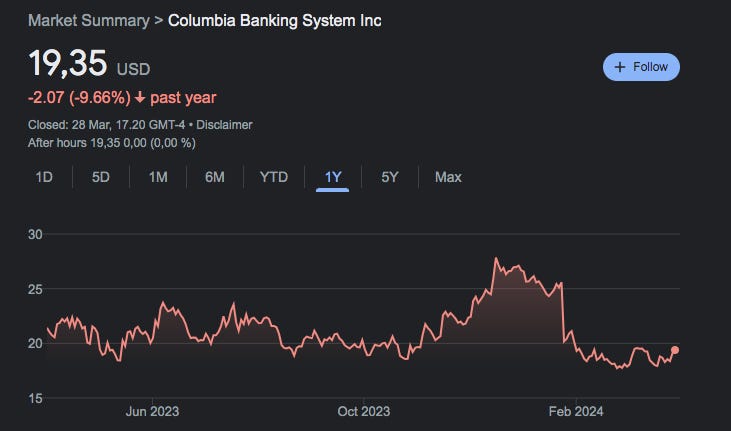
COLB has been punished by the market for missing analyst’s earning expectations in Q4 2023, with the stock being hammered about 30% since Jan 2024, and 24% since its Q4 results date(Jan 24th):
This mispricing has created an attractive buying opportunity, and insiders are racking up shares since they realise the egregious value proposition which this decline has presented: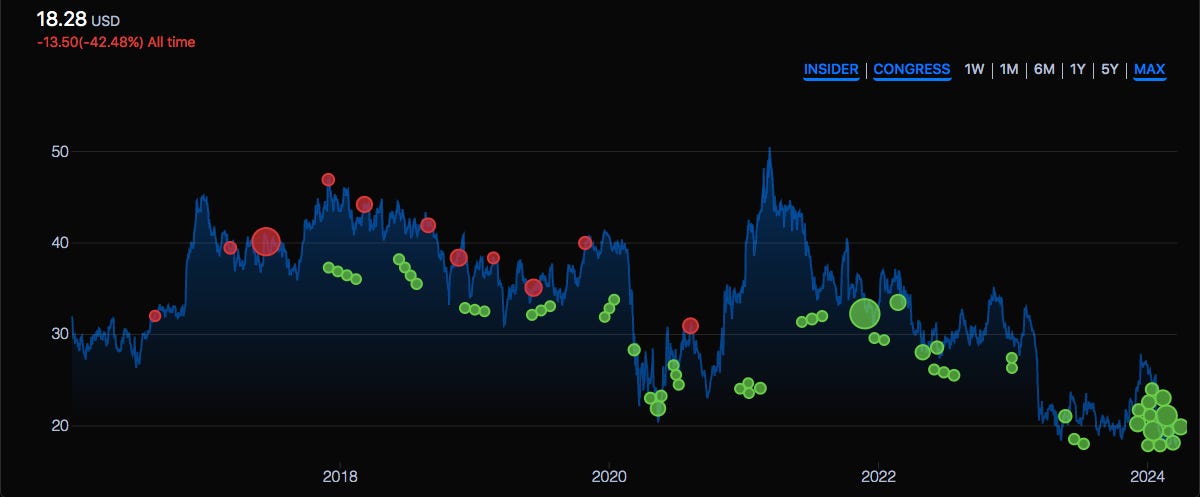
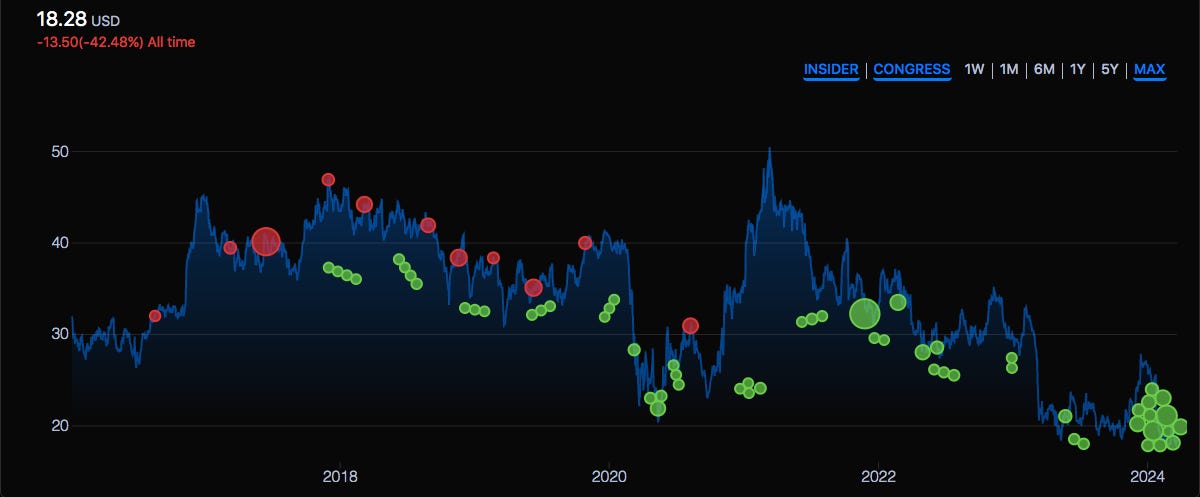
(Green dots representing buys, with red dots representing sells. Notice the volume of buying in such a short timeframe has never seen before since 2016?)
The market has failed to realise that the 20% drop due to disappointing earnings is completely unwarranted, and were due to one-off problems that are likely to never repeat in, say Q1 2024. Management also believes this, as reflected in language used in earning calls and investor presentations, and obviously, insider-buying behaviour. We believe COLB is poised to surprise skeptics in the coming quarters
The recent selloff has rewarded investors to buy COLB’s stock at a valuation cheap valuation that presents itself once-in-a-lifetime. The cheap valuation provides an opportunity of asymmetric return, with the discounted price serving as a margin of safety.
Ragnarok Research assigns a short-term(2-3 months) Price Target of about 25 US Dollars, representing a conservative 30% gain from current levels.
Part I: the reason for the decline:
COLB is a relatively simple business, as described in its 10-K:
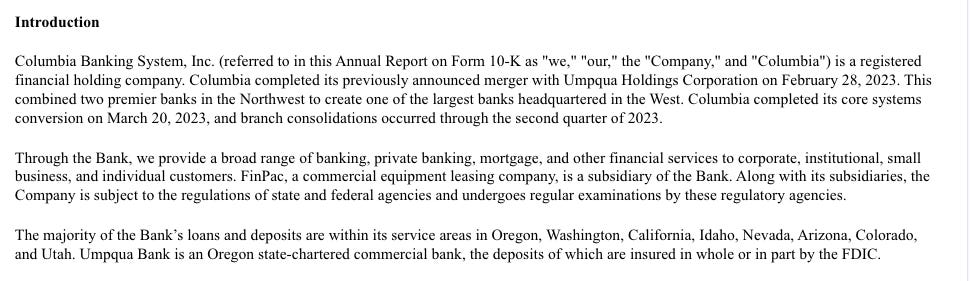
COLB is your typical bank that offers wealth management, financial planning, mortgage, and other services to corporate, institutional, small business, and individual customers.
It is a financial holding company that, recently, has had a lot of selling pressure due to misinformed investors blowing its recent earnings disappointment out of proportion.
On the first glance, it does seem bad:
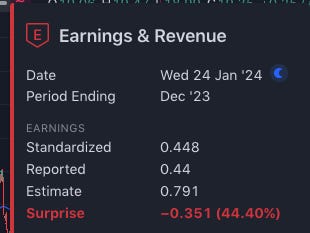
A 44% negative surprise in Earnings is something that can scare off any investor bullish on COLB. But what was the reason for the drop in net income ?
Below is quarterly revenue since Q2 2022:


COLB’s revenue actually increased by a tiny amount from Q3 to Q4. The reason for low net income was increased non-interest expense:

Non- interest expense increased by 65 million dollars from Q3 to Q4.
At first look, this is a dire cause for concern, and a practical, “intelligent” investor would consider closing his/her position in the stock.
But, what investors faile to recognise is that the increase in expenses is temporary, and COLB is poised to make a killer comeback in the coming months.
For instance, in COLB’s Earning release document:
https://s26.q4cdn.com/577104185/files/doc_earnings/2023/q4/earnings-result/COLB-2023-Q4-Earnings-Release.pdf

As the CEO himself said, “one-time” expenses were the perpetrators of the increase in expenses.
First off, COLB has incurred 2 one-off expenses(see highlighted in blue):
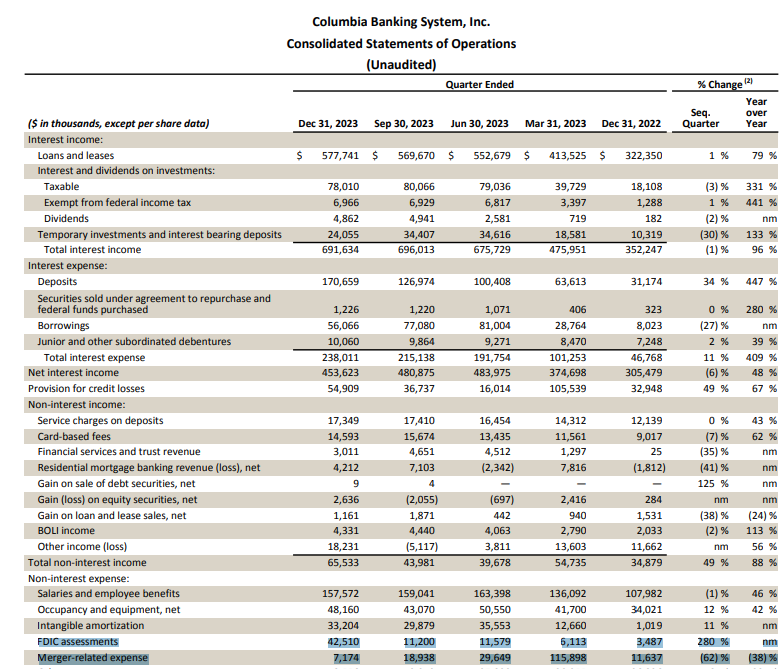
https://s26.q4cdn.com/577104185/files/doc_earnings/2023/q4/earnings-result/COLB-2023-Q4-Earnings-Release.pdf
1) Merger related expense(7 Million in Q4) with regards to its merger with Umpqua bank. The expense is decreasing quarter by quarter, and we expect this to turn negligible by the first half of 2024.
2) FDIC Assessments(33 Million in Q4), which can be explained via the 10-K:
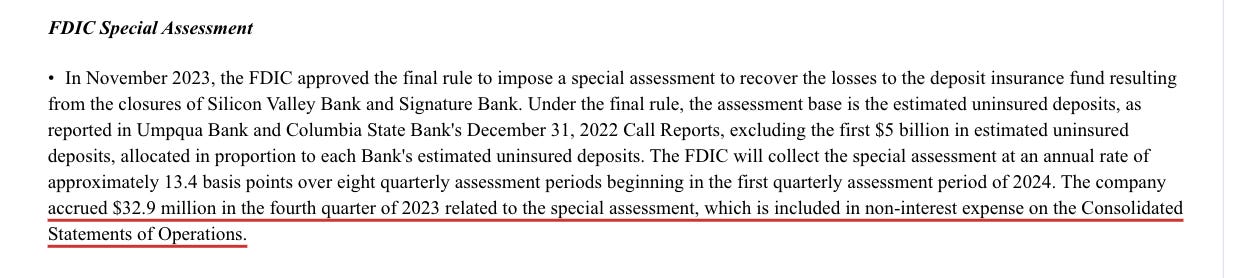
Basically, the next time COLB incurs FDIC(Federal Deposit Insurance Corporation) assessment fees(standard probes by a governmental agency) as much as 33 million dollars in a single quarter, it will be at the end of 2024, according to our understanding. This is ample time for COLB to cut back on other one-off expenses, as explained by management in their fourth-quarter earning call:
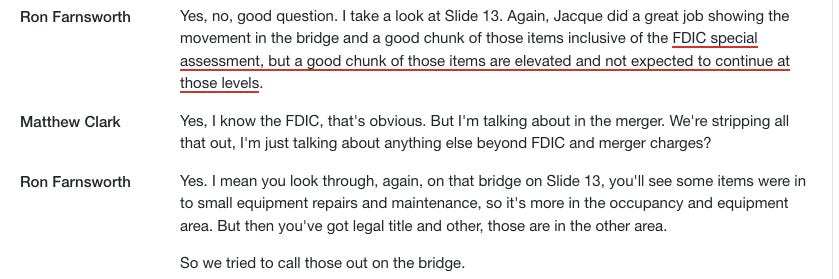
https://capedge.com/transcript/887343/2023Q4/COLB
As it is clearly said, some expense line items in Q4 2023 were ‘elevated, and not expected to continue at those levels’.
Bottom line- in Q1 2024, the 33 million FDIC expense would vanish, so would some of the merger expense, and some of the extra ‘expense line items’ as well.
The main perpetrator of the selloff is, ultimately, the FDIC assessment costs- something the market fails to recognise as an expense which will only be incurred at the end of every year, for the next 8 quarters(2 years).
A 20% drop with an increase in revenue can only signal that the market is misinformed about the nature of the expenses, since it was the net income that ultimately ‘disappointed’ the market(EPS disappointed by about 44%, while revenue disappointed by only 3%)
Part II: Absurdly low historic valuations:
Since this writeup mostly focuses on a short-term trade based on the market being slightly ‘misguided’ according to us, we won’t pay a lot of attention to valuation. However, a few figures we just snagged from Simply Wall Street:
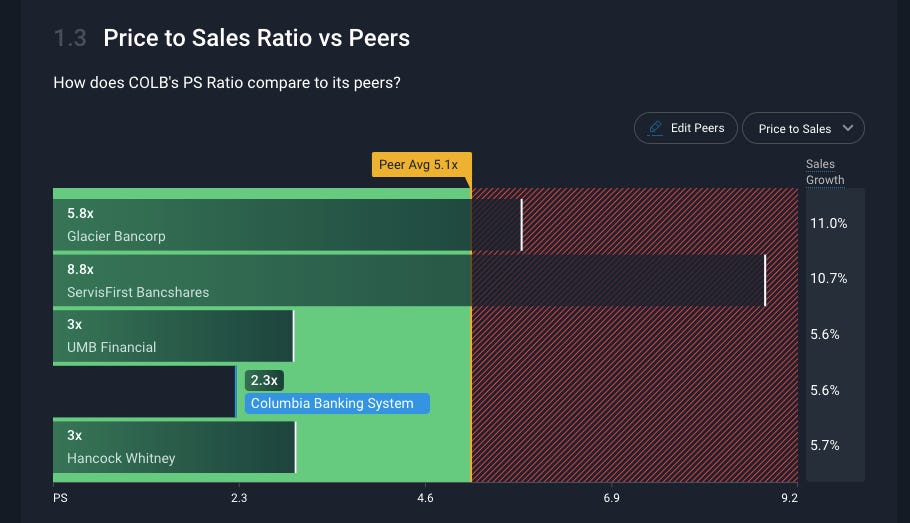
(COLB trades at a 2.3x PS ratio, with the average being 5.1x. This implies about 100% upside according to simply wall st.)
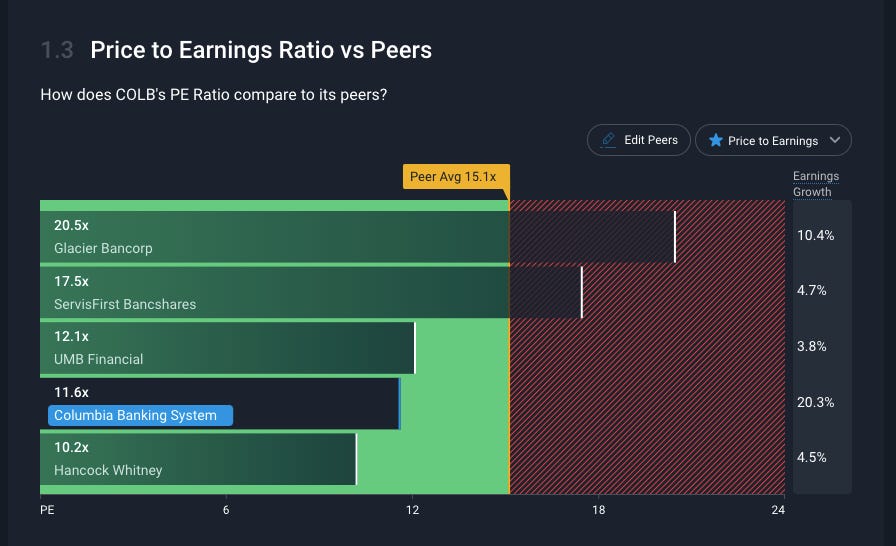
COLB, again, trades at 11.6x PE ratio, with peer average being 15.1x. This implies about 30% upside.
If we plot the historic Price-To-Sales ratio of COLB, we get:
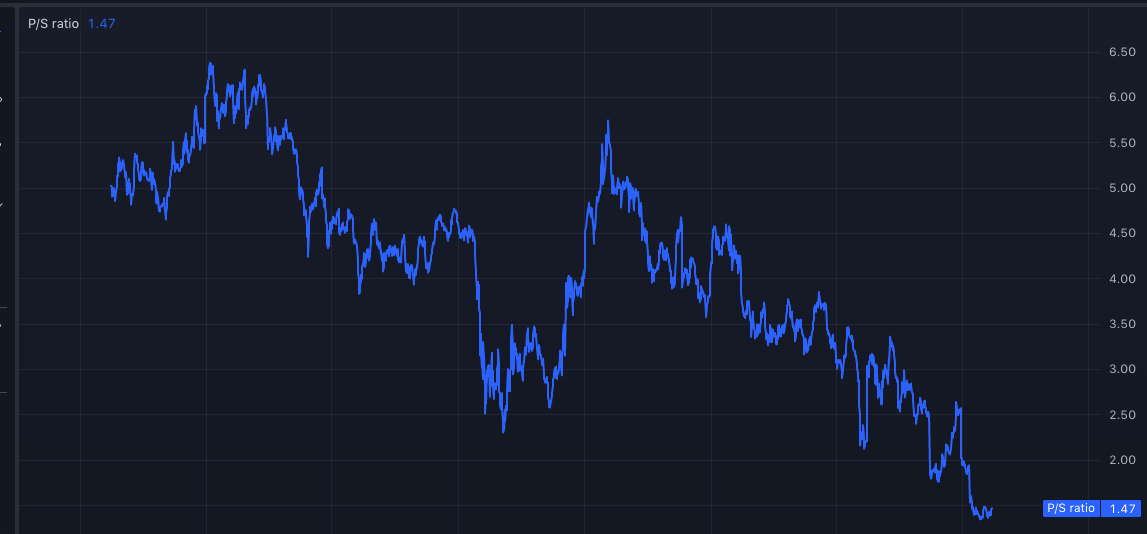
A historic low.
Something interesting, however, can be seen with its historic PE ratio valuation:
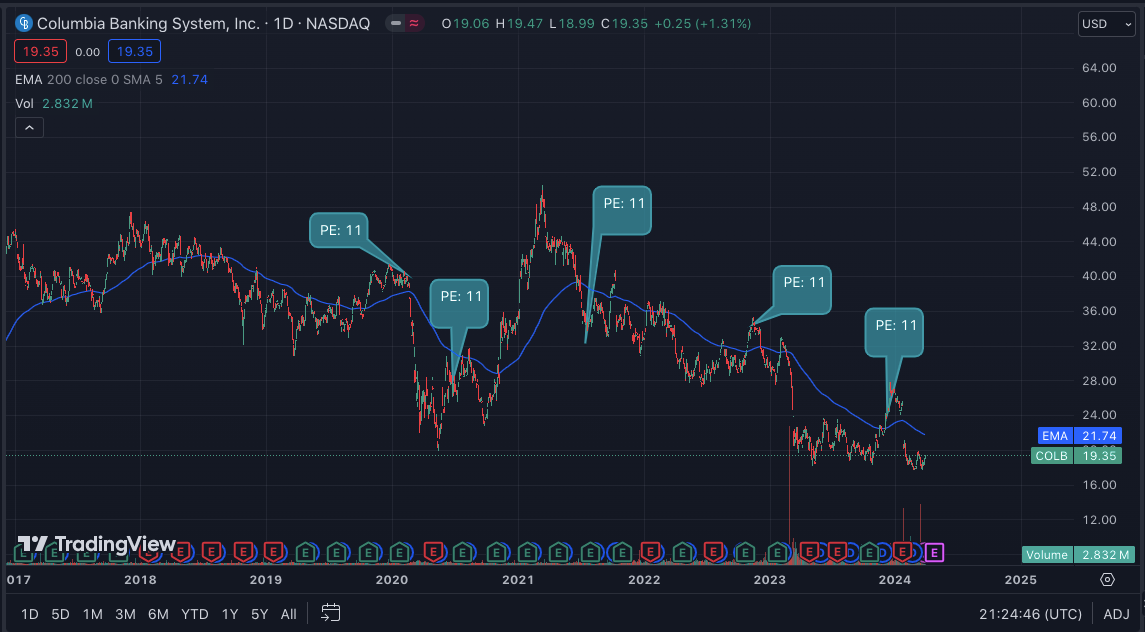
Wherever there is a callout sign of ‘PE: 11’, those are the points in time where COLB had a PE ratio of about 11. The lowest historic price of COLB when it had a PE ratio of 11 prior to now was when it was trading at about 24 USD per share- implying upside of atleast 20%. The highest price, when COLB had a PE ratio of 11, was when it was trading at about 40 USD a share, implying about 100% upside.
Mr. Market has granted us, regular investors, an opportunity to capitalise by buying a mispriced stock at historically cheap valuations. Best part ? Management realises this, and have been racking up shares.
Part III: Management realises the absurd bargain and the untapped value in the stock
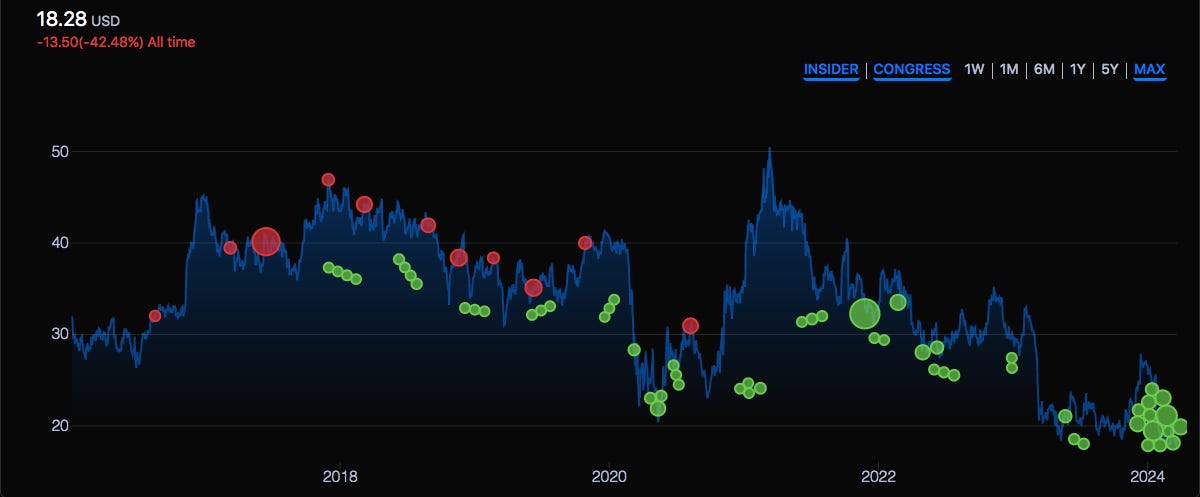
Does this chart need any explanation at all ?
After the sell off post-earnings, management has clearly realised that the market is misguided, and that COLB is poised to make a comeback in the coming months, and just like every other team of executives, they want to get rich(not always good- but in this case, we’ll give them the benefit of the doubt haha)
For instance:
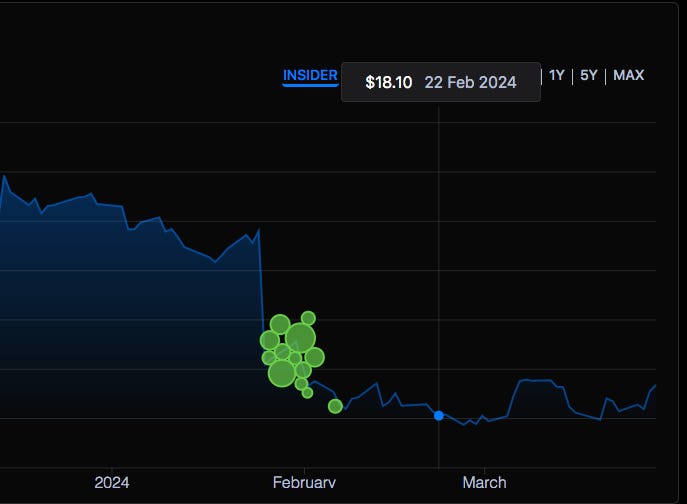
It is pretty evident that the trades were done post-drop.
The cluster buying is by the following executives:
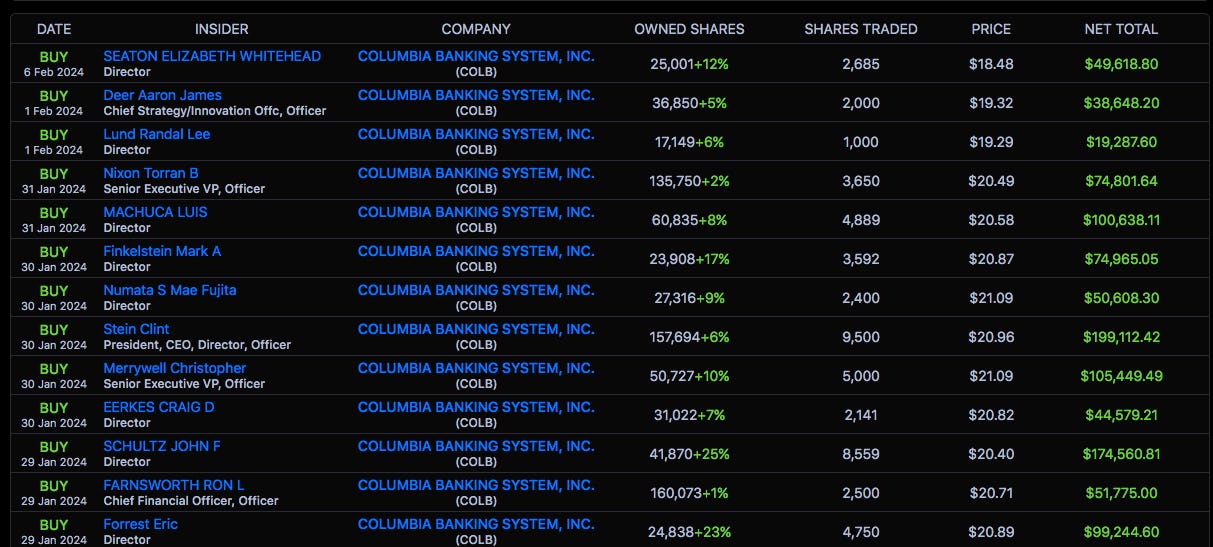
Amidst selling pressure of a stock, the set of people that have the most informed idea of a stock’s future moves, is ultimately management. There’s a saying: “Management can sell stock for any reason, but they buy for onle one: The think the stock price will go up” and what better set of people is there to base trading decisions on ?
Conclusion:
While we do are not pitching COLB as a hold-forever stock, we are sure as hell that it is one of the most attractive short-term opportunities. It provides a positive asymmetric return opportunity, due to all the reasons listed above- and the best part ? Management agrees with me, based on buying behaviour.
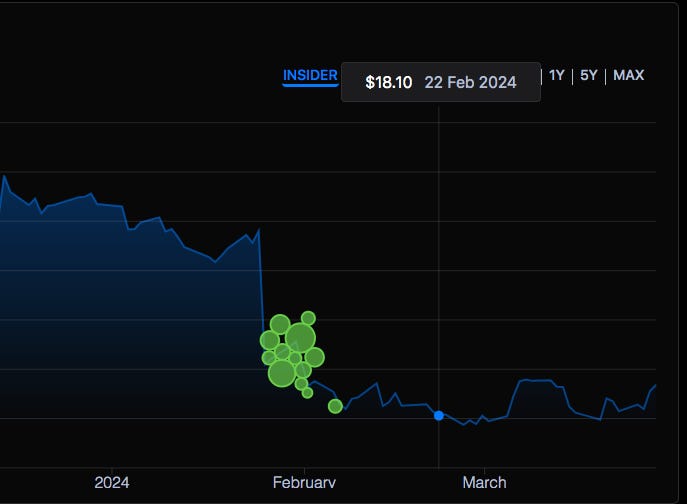
Something interesting is that one of these insider buys were by CEO Stein Clint, and the last time he bought COLB, shares proceeded to rally 100%:
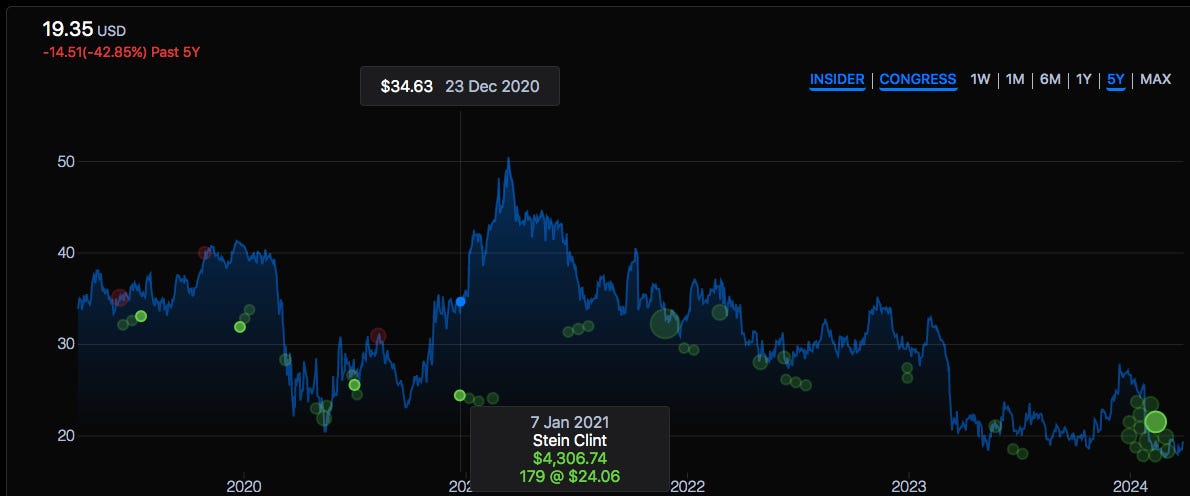
Again, there is always the argument that “markets can stay irrational longer than you can stay solvent”. Well, the margin of safety is the following:
- Even total liabilities deducted from an total assets amount more COLB’s market cap(assetts-liabilites=5B)
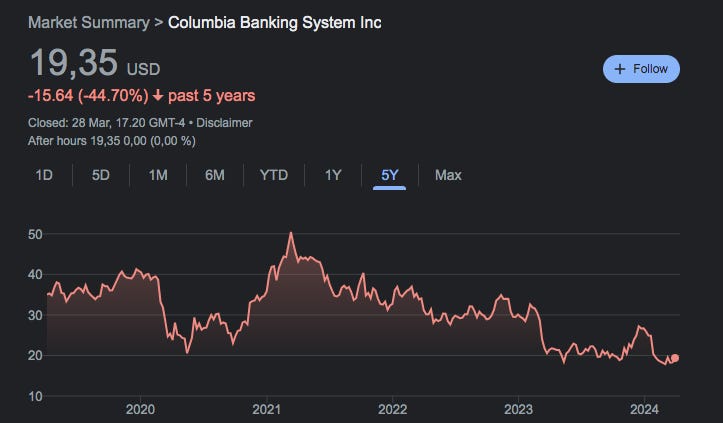
- COLB’s annual revenues have been in a constant state of increase since 2017, even though COLB’s stock is down about 55% since 2017:

Revenues going up quarter-to-quarter from 2017 to 2023.
i like COLB post PPBI.