

The SVXY trade
At first glance, SVXY can be seen as a great way to beat the market. After all, it returned about 40% YTD in 2023, compared to 20% by the S and P 500. But, over the long term, that is not the case. Since SVXY’s inception in 2011 has returned 277%, while the S and P 500 returned 262%. While it has outperformed the market, the margin is unimpressive. This is because in 2018, the SVXY collapsed by about 90%(sounds like a gamble… I’m in)
About SVXY
SVXY is an ETF that aims to provide exposure to short positions on the VIX futures market. The VIX is known as the fear gauge of Wall Street. It measures the Implied Volatility of the S and P 500, derived from the supply and demand of call and put options. This means the SVXY falls whenever the VIX rises, and vice versa. In other words, they are almost inversely correlated. ‘Almost’, since the VIX futures behave differently than the VIX itself. Here’s how:
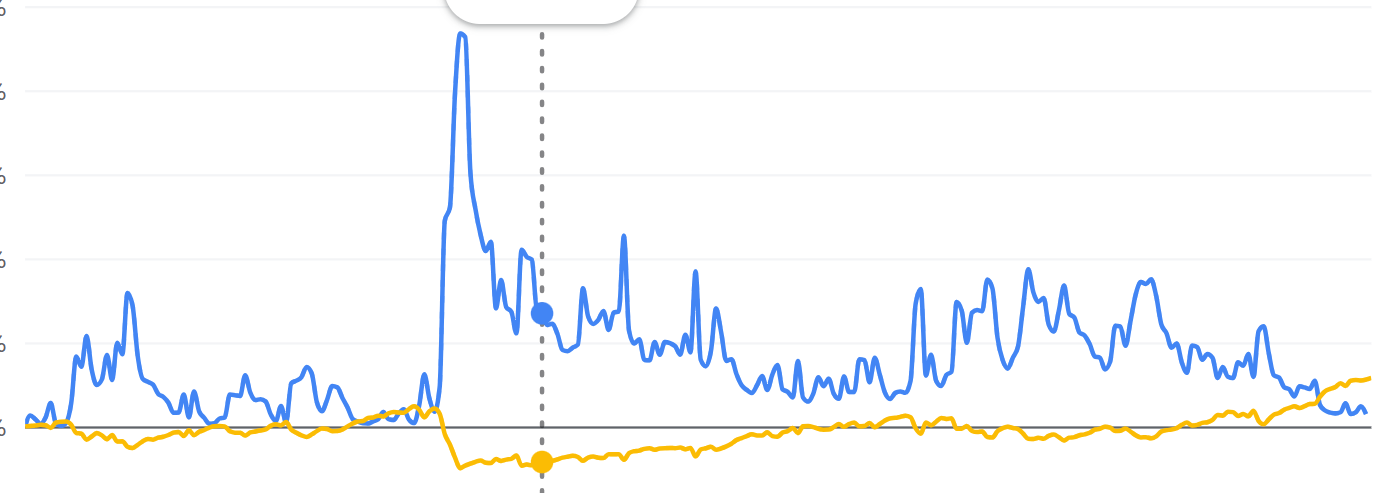
Source: Google Finance
Blue: VIX
Yellow: SVXY
The VIX can be seen as mean reverting. It will return to the middle if it goes too high or low. But, the S and P 500 VIX Futures index looks completely different:
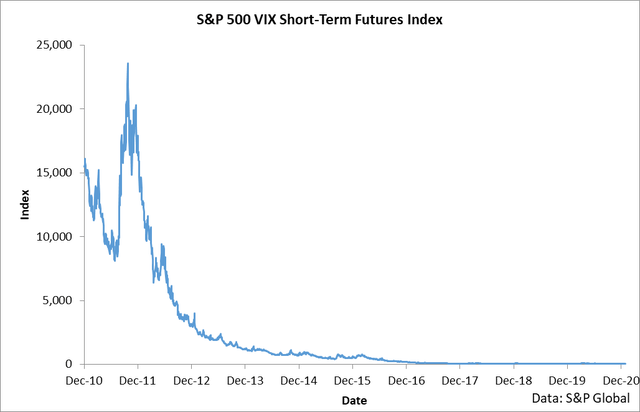
Source: https://seekingalpha.com/article/4397979-svxy-solid-long-term-volatility-play
There are periods where the index does rise(quite drastically) but about 80-90 per cent of the time, it’s in a decline. This is why the SVXY goes up most of the time but falls severely, should the VIX rise by a lot.
Someone who shorts the index just before it spikes up must be unlecky as hellll(prolly me in the future)
The reason for this is: VIX futures are more expensive than the VIX itself, about 80-90 per cent of the time. So, futures prices decrease to the VIX’s spot price, as the expiration date draws near.
There is a premise for this: Whenever the VIX has fallen, a lot of people start betting that it will go back up(since VIX is mean reverting) and start buying futures. This increases futures prices, while the spot price remains unchanged. Over time, these futures contracts lose value, giving a boost to the SVXY.
But, again, it might not seem like a good trade due to the violent drops. But, what if we can almost predict this ?
First, let’s look at how the spread between VIX spot and futures price looks like in the past:
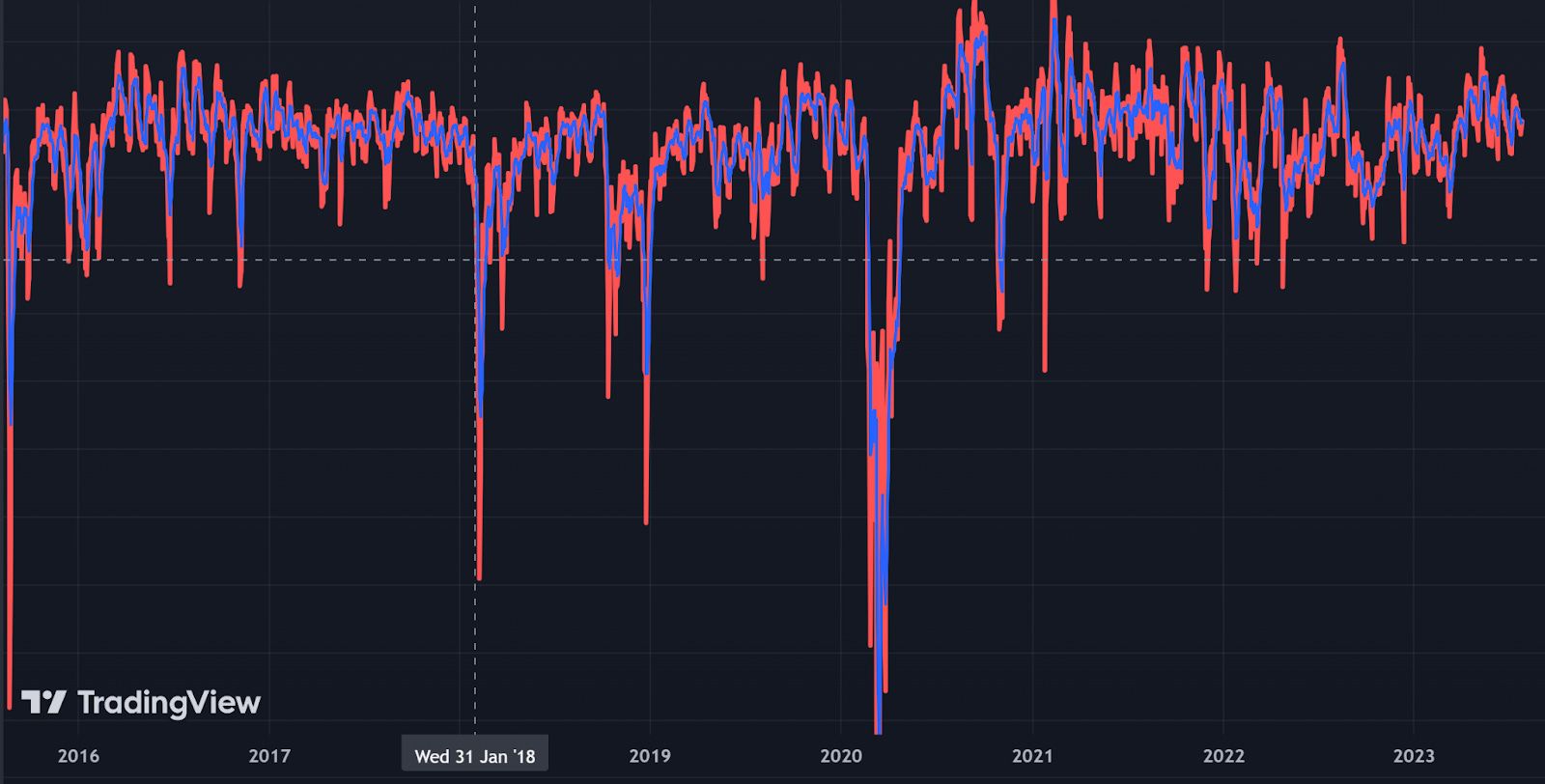
Red is the difference, and blue is a moving average plotted.
We know SVXY increases whenever the futures are priced above the spot. But, whenever the spot price outpaces the futures price by a lot and quickly, the SVXY is seen to dip most of the time:
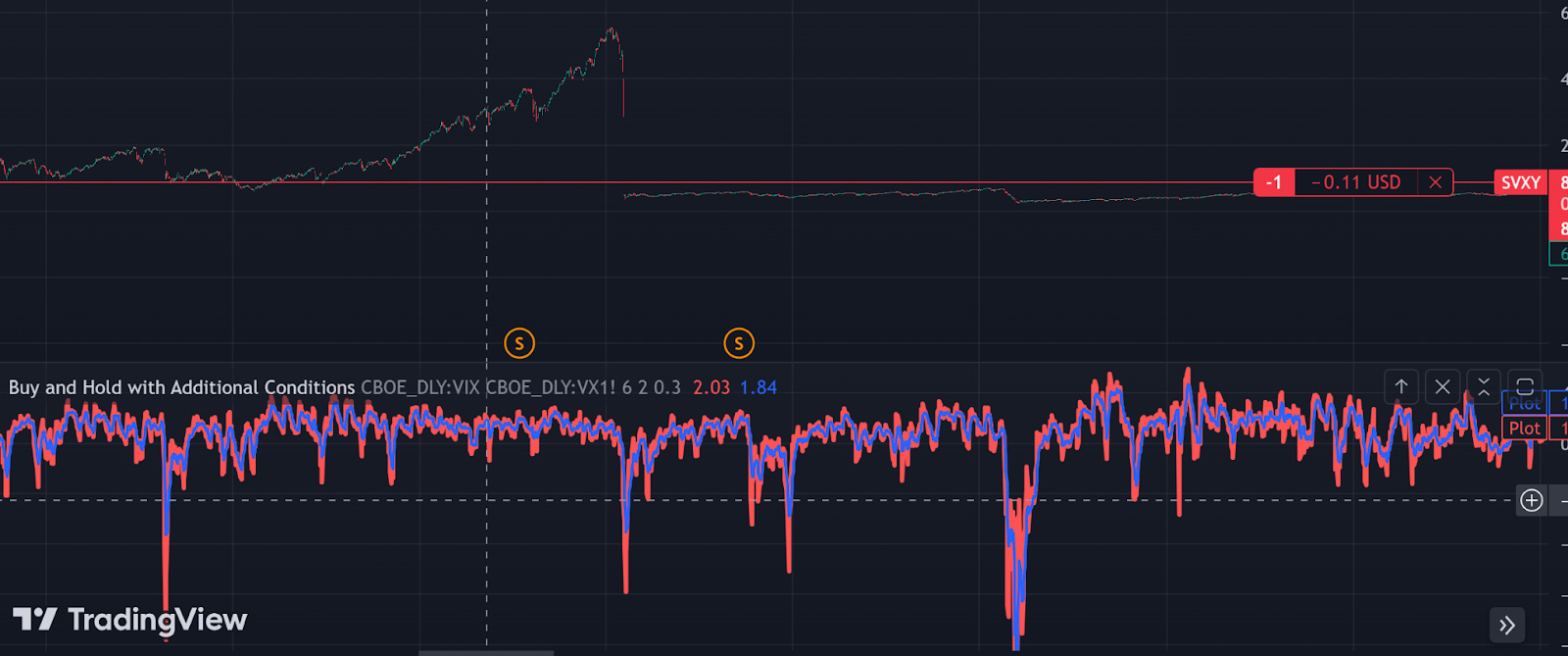
What if we can close our long position when desired metrics are fulfilled (indicating that the spot may soon outpace futures)?
So, I set out to devise a crude strategy for this. Calculate the difference between the spot and futures of the VIX for each day and close position whenever the 30-day moving average of this dips below 0.8. Of course, these metrics can be changed to suit the investor’s desired strategy. Re-enter the buy position whenever the slope of this moving average is positive again(I concluded that SVXY would have hit market bottom if the spread between futures and spot started decreasing).
I backtested this for dates since the inception of SVXY, and the results were intriguing:

Source: Tradingview
We outperformed both the SVXY and S and P buy-and-hold strategies for this period!
The reason for the low win rate is because the conditions for the closing buy orders were met a lot of times, not always followed by a market decline. But, still it made impressive profits while perfectly closing positions before every big crash in the SVXY.
But, we can improve this, and get results like the one below by implementing short-selling:
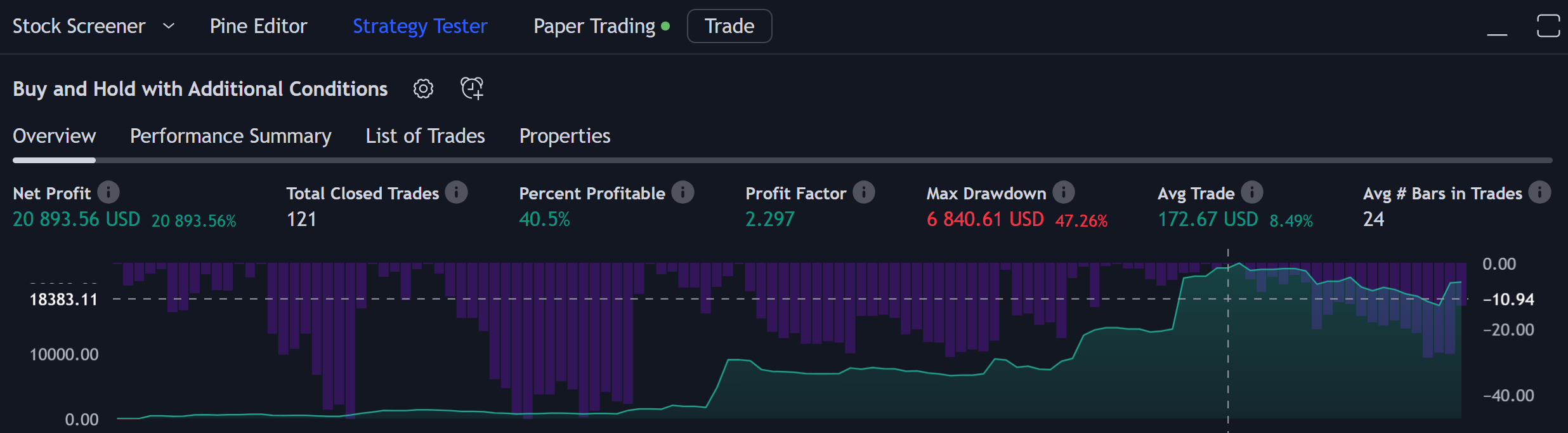
Methodology:
Get difference between VIX spot and futures for each day
Plot 6 day Exponential Moving Average for this difference.
Code it to buy-and-hold from start
If the Difference goes below -1.5 and slope of moving average is negative, exit buy trade, and enter short trade.
Exit short trade whenever slope of moving average is positive again, and difference is above 1.5, exit short trade, and Re-Enter buy trade
Maximum capital invested into strategy for each trade/
Note:
This strategy is most probably a shit one for two possible reasons:
1) Overfitting(Idt I did that much, but the possibility is there)
2) doesn’t work again since market conditions change
3) In 2018, SVXY changed it’s leverage from -1.5x VIX futures, to -0.5x, so returns will be lower, but trading methodology should be intact
BOTTOM LINE:
DOESN’T MAKE A DIFFERENCE SINCE WE’D LOSE MONEY ANYWAY
Great article!