

As I’ve mentioned before, I am at 10th grade currently, so I decided to, you know, build up my resume for college applications a little bit by studying some AP classes curriculum(makes me sound studious, trust me im not)
I came across the AP Microeconomics and AP Macroeconomics course on Khan Academy, but what really interested me was the Finance and Capital markets course.
I skimmed through some of the videos, since the instructor worked previously at a hedge fund, and maybe is bound to know his shit.
I came across this module called ‘Hedge Fund strategies’, and it basically explained the concept of merger arbitrage.
If you want to know a little bit about merger arb, here is a pretty good resource.
I’ll try to give a crude summary:
1) One company want another company
2) Company agrees to buy the shares of target company at a premium to its current trading value
3) Target company’s stock rises, but not quite to the level of the buyout price
4) A merger arbitrageur would weigh the probabilities and decide whether the transaction would go through, and based on that, takes a long or short position in the target company. The long position’s max profit is the buyout price, and the short position’s max profit is essentially 100%.
btw I forgot to mention: I’m a trading noob and there is a very very high chance this trade will return -2000%.
Some hedge funds are specialised for this kind of analysis, and I’ve read that this is not really suited for retail investors for some reason, (prolly cuz we all are stupid and cannot really move the markets, so the reason for our existence is pretty much … none)
Now, during this time between the announcement of the merger and the actual deal closing, a few interesting things should happen(this is just guesswork, i’ve no idea on how to use excel or whatever to retrieve options volume data, there doesnt seem to be a website to give this stuff for free):
1) Institutions and retail crowd hedge their positions
2) Institutions and retail crowd TRY to conduct merger arb
3) Institutions and retail crowd speculate A LOT.
This gives rise to some volatility mispricing, BIG TIME.
I do not make my trades based on IV alone, I mostly look at the spread between IV and RV, calculated by IV/RV ratio by a pretty dinky code I programmed in about a day or so.
The fact that I am manually scraping the data from an external source (this isnt really supposed to be done tbh) through the inspect element in chrome gives me doubts about the technical aspects about our prediction, but eh who cares, we were about to lose this trade anyway.
See, what happens is the actual stock price slowly and steadily climbs towards the target buyout price(well there is a violent arge after the announcement, but after that its relatively stable ascent), but the implied volatility isnt reflective of this. After a while, implied volatility DOES fall, but still the RV is way lower.
HZNP: An Opportunity
Horizon Therapeutics Public Limited company is being taken over by Amgen Inc, at a buyout price of 116.6 dollars per share, with the current price trading at 102.63 dollars per share.
Assuming ‘everything is priced in’, I’d say we are still a bit far apart from the deal from materialising, since it needs about a 13% increase in the price. If the deal was close to being closed, I’d say the price would reflect that.
But, the IV/ RV spread ? Goddamn its high
Here is a chart of the spread over the past 8 years of the 10day IV and 10d RV:
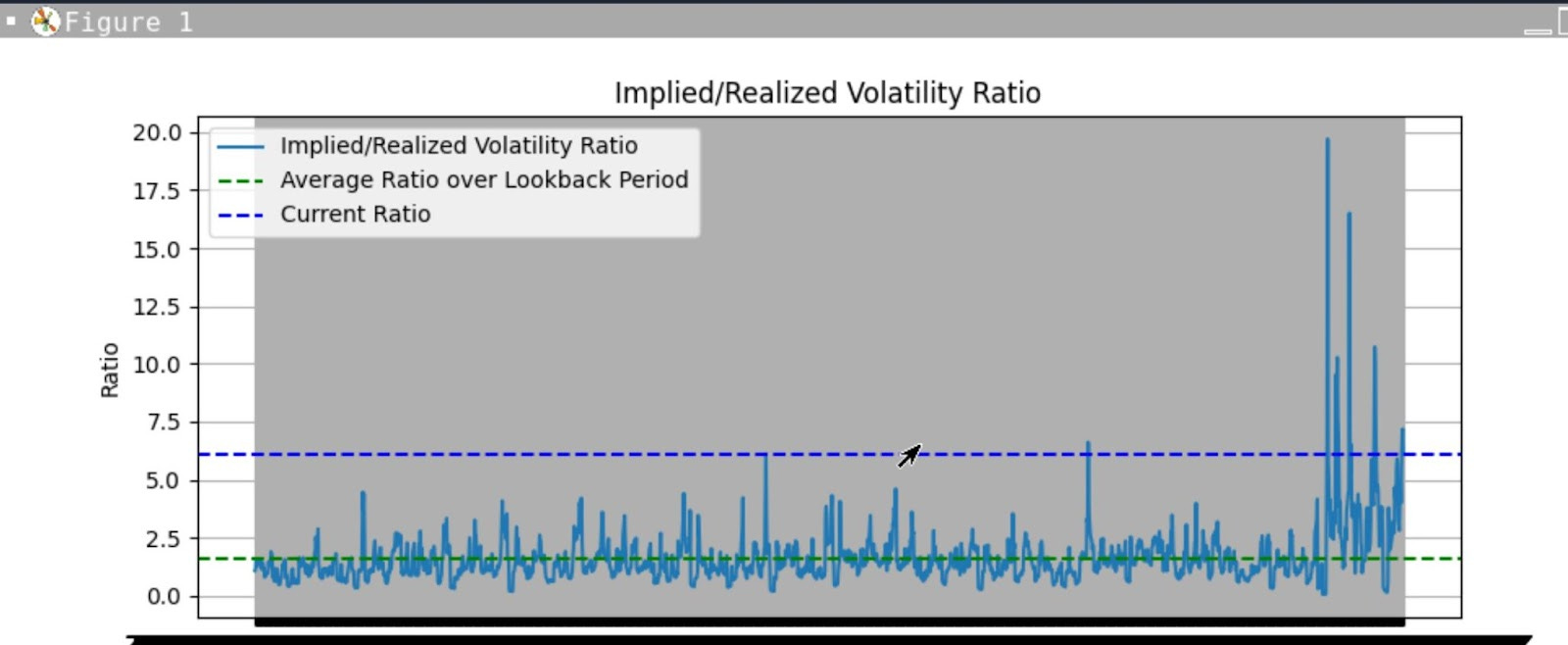
In the graph above, the average over the whole period was a little below 2.5, meaning on average, IV was 2.5 times the RV.
But if we look at the same chart for the past 4-5 months or so:
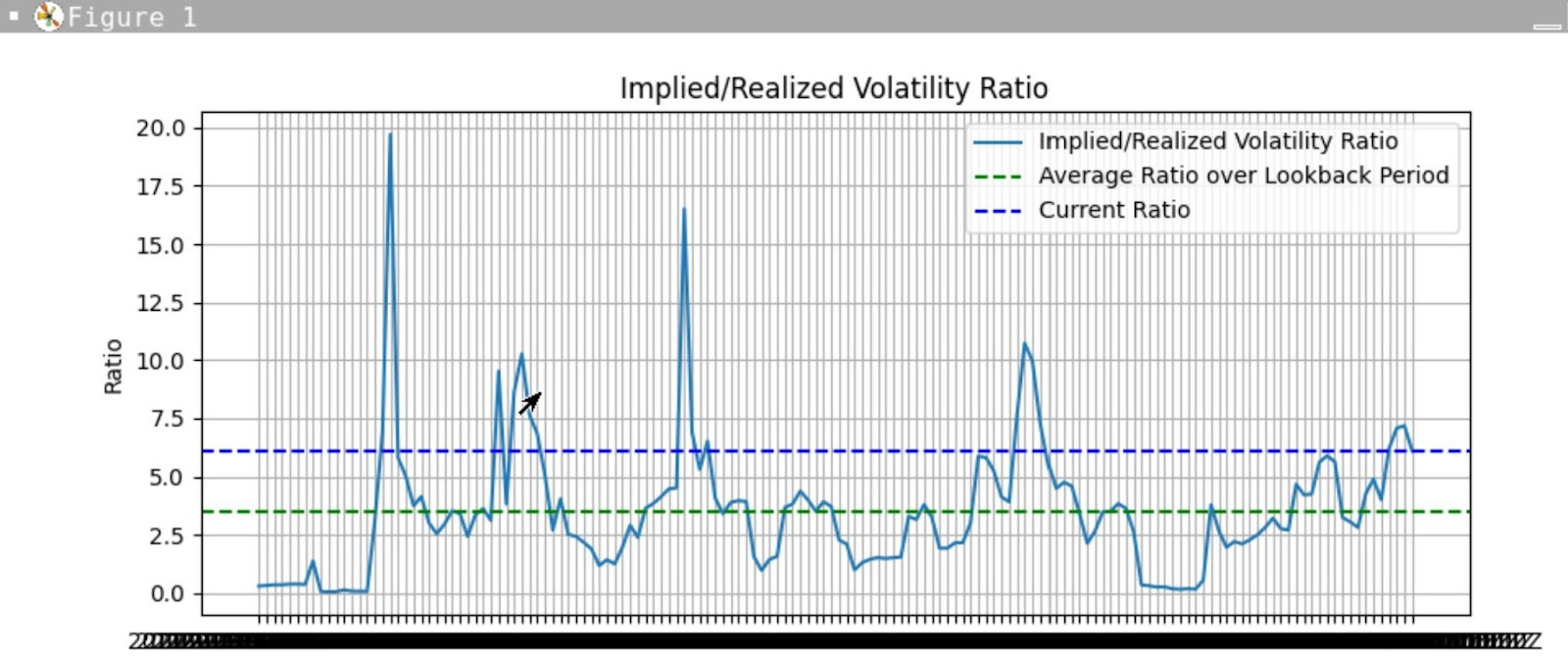
The average is at about 3 - 3.25, meaning the average spread has increased after the announcement due to the amount of hedging, speculation and arbitrage attempts (i guess ? idk)
The reason I used 10 day IV and RV is that I’m looking to sell relatively shorter dated options, since the more time there is until expiration, the more the risk of the deal actually being closed, and RV skyrocketing and destroying our position.
So, I sold a call and a put with 10 days until expiration with the strike price being 105 Dollars.
Only time will tell how much money I will lose in this trade.
WARNING: PLS PLS DONT DO WHAT I AM DOING, IM NOT HEDGING ANYTHING, AND QUITE FRANKLY TAKING A HUGE AMOUNT OF RISK, OWING TO MY SHIT ABILITY OF DOING DUE DILIGENCE.
Other ideas:
AJRD:
I can see a similar situation as above with the AJRD stock, with Aerojet Rocketdyne being purchased by L3Harris for 58 dollars per share, and AJRD is trading rn at 54.85 per share.
Past 8 years spread IV/RV spread:
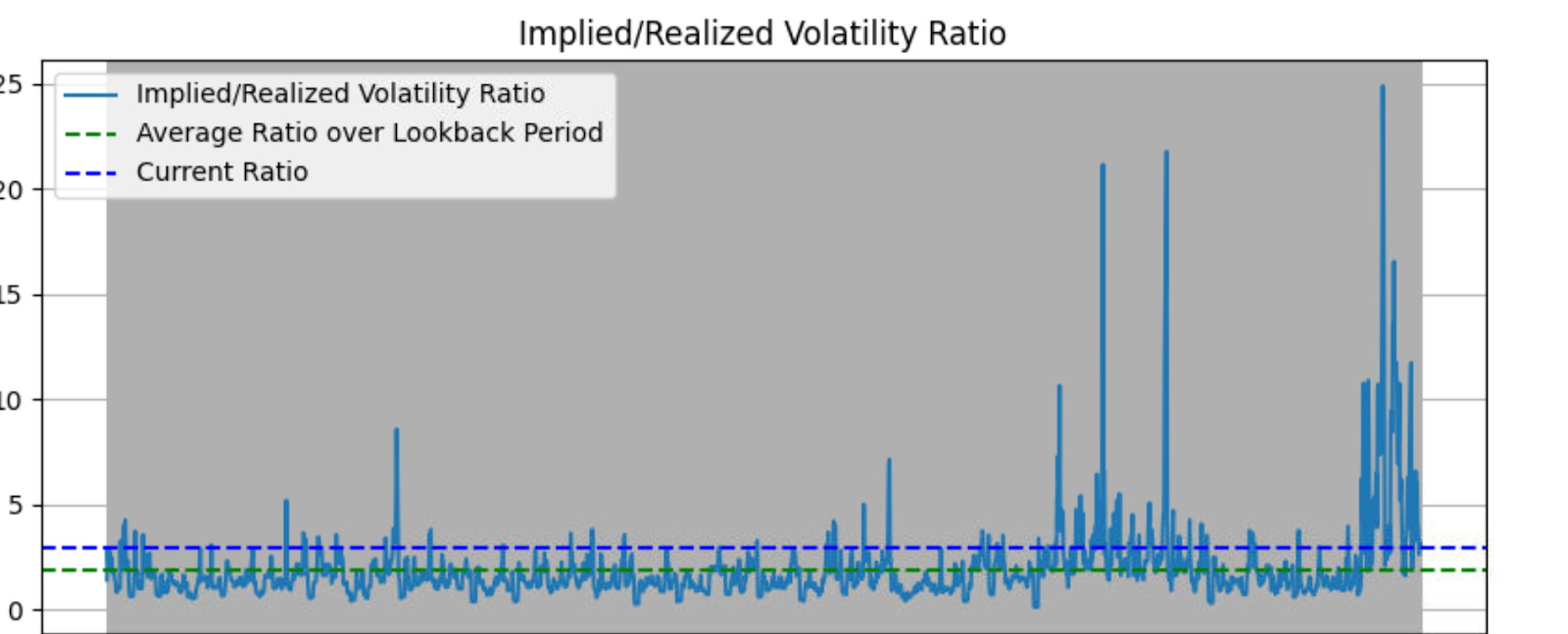
Average at about 2 or 1.8 above.
Recent IV/RV spread after announcement:
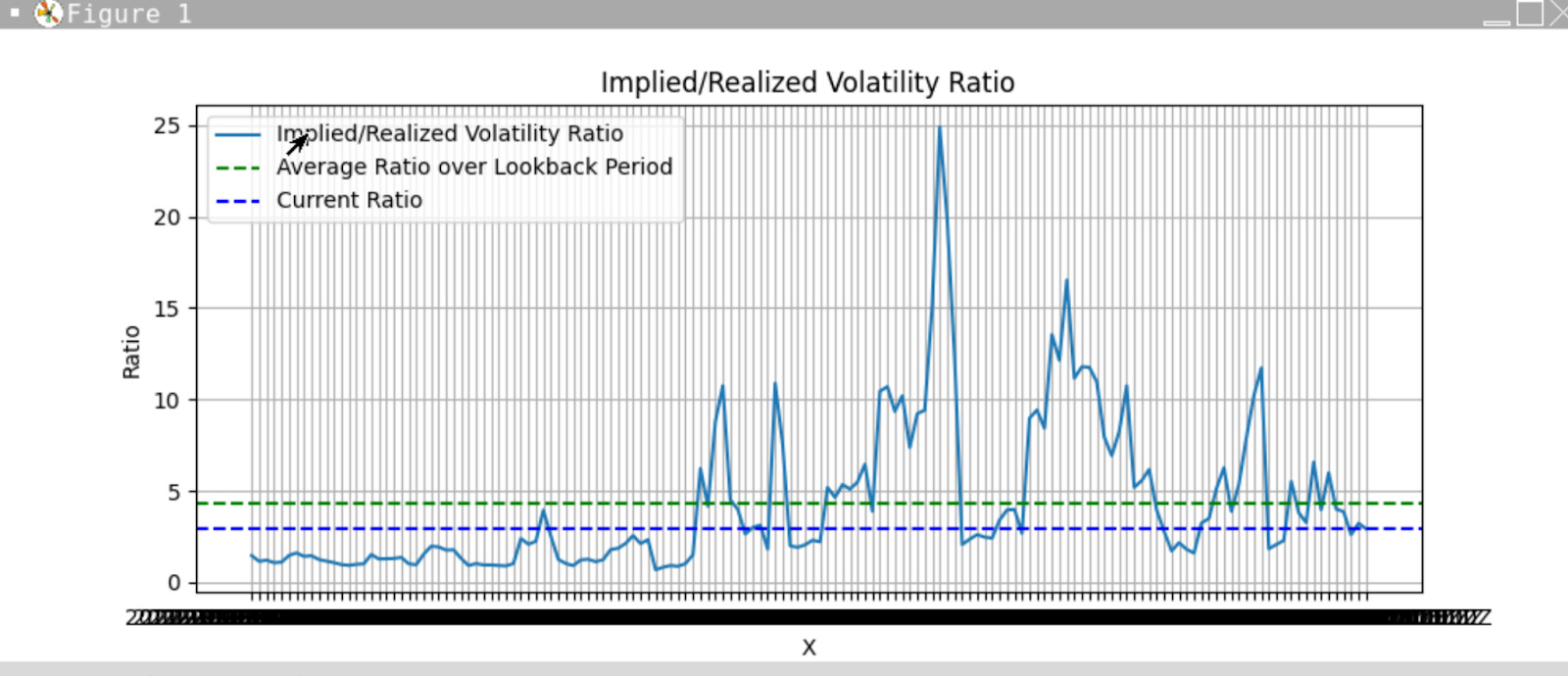
Average now is maybe like 4.8.
But, the spread seems like it is heading towards below 1(this indicates RV has outpaced IV, which can trigger losses for selling our straddles)
But, nevertheless, an interesting opportunity for the next few days.
Trade results(10 days later):
Well, will you look at that ! The trade printed money.
I do have to warn you though, this is, in a way, gambling.
You are betting on the fact that no major news will come in the 10 day window in which your short straddle is open. This trade was kind of bound to work since research shows Biotech deals take a while.
